


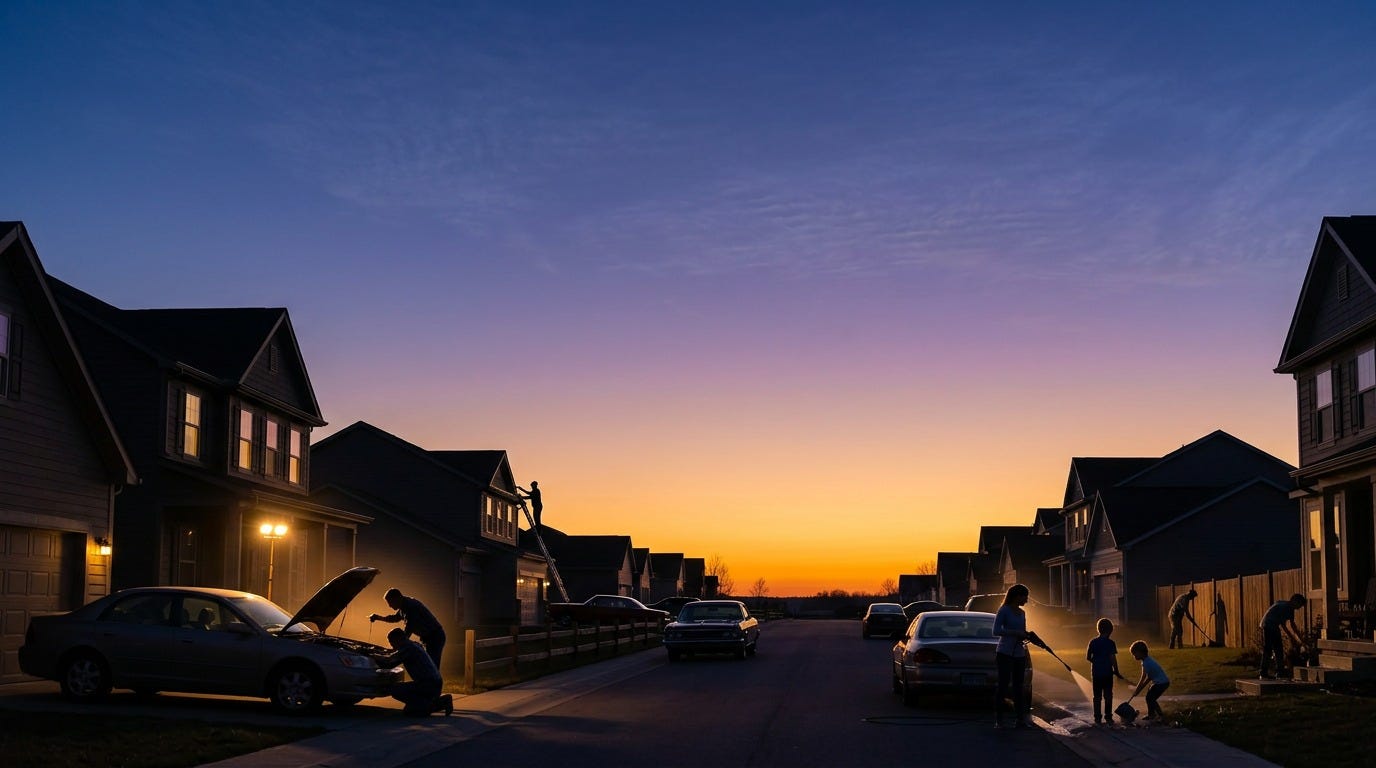
You change the oil in your car. You do not argue about it. You schedule it, you pay for it, you move on.
You re-seal the deck. You service the HVAC. You replace the water heater anode before it fails.
You go to the dentist twice a year. You get the annual physical. You take the kid to the pediatrician. You take the dog to the vet for shots.
You do all of this without a single op-ed being written about whether preventive maintenance is the right model or whether you should focus more on emergency repair.
Then there is animal welfare.
Animal welfare is the one field where prevention is not even an afterthought. It is not even a consideration.
The dominant model funds rescue. The conversation is about kennel space, transport, intake processing, adoption events, post-adoption returns, behavior assessments, length of stay. Every line item is downstream of the moment a family lost the pet.
When somebody mentions prevention, the field calls it innovative. We do not call oil changes innovative. We call them oil changes.
The math is not subtle.
Shelter intake costs $400 to $500 per animal in processing, housing, medical, and staff time. That is the ASPCA’s own number.
Upstream prevention runs about $44 per family in food, supplies, transport, and basic vet support. Same animal. Same family. One tenth the cost. And the pet never has to leave home.
The same one million dollars put into the downstream model versus the upstream model produces a $20.25 million taxpayer savings, prevents 22,500 shelter intakes, and avoids 350,000 shelter days. That is a 20.3x return on investment, and it is verifiable.
The numbers live in the AAF Sponsor Impact Calculator at
https://calc.animal-angelsfoundation.org. Anybody can run them.
The reason we keep funding the downstream version is not because the math is unclear. It is because the upstream version has not been built yet. It has not been built because nobody is asking for it. Nobody is asking for it because in animal welfare, prevention is not even an afterthought.
Every other field figured this out decades ago.
Public health put preventive medicine on the same footing as treatment in the 1950s. Construction codes mandate maintenance reviews. The automotive industry built an entire service economy around prevention. The dental industry built insurance products around cleanings being free or discounted because cleanings save money on root canals.
Animal welfare is twenty years behind every one of those fields. Not because animals matter less. Because the field structure has not reorganized around the math.
Here is what it looks like when you do.
Animal-Angels Foundation recently took a Bridge case in Birmingham. Nova is a blind six-year-old dog. Her owner Haley is pregnant and due in July. She called us in May worried about how she would manage a newborn and a senior blind dog at the same time.
The traditional move would have been to take Nova into rescue. Process the intake. List her for adoption. Absorb the $400-plus cost. Family separates. Pet starts over. Shelter takes another case onto its books.
We did something different. Haley keeps Nova at home through the pregnancy. AAF covers Nova’s food, supplies, and any vet care she needs. We work in parallel to find Nova a permanent adopter so the transition is calm instead of frantic. A local groomer offered free grooming to get Nova photo-ready for her listing. Total cost to AAF is roughly $25 to $100 a month.
This is what an oil change looks like in animal welfare. Not rescue. Not crisis response. Preventive maintenance for a family that wants to stay together.
Until the field starts treating prevention the way every other field treats preventive maintenance, the same crisis will repeat every year forever. The math is already there. The framework is already there. What is missing is the will to fund the upstream layer instead of the downstream one.
5.8 million dogs and cats entered the U.S. sheltering system in 2025. That number was down 121,000 from 2024, which proves prevention works at scale. But 147,000 more pets entered the system than left it. The shelter year-end population grew. The gap is still widening.
Adoption is not the lever that closes that gap. Prevention is. And prevention is exactly the thing the field is still treating like a fringe idea.
It is time to build it.
Send this to one person who has not connected these dots yet. The math only matters when more people are running it.
Subscribe. The conversation is short on people willing to run the numbers and say what the numbers say. Add yourself to the list.
Join the shift to prevention.
BJ Adkins Founder, Animal-Angels Foundation animal-angelsfoundation.org
P.S. Animal-Angels Foundation runs a Prevention Partner Program that funds the upstream work directly. If you want your monthly gift to fund the oil-change layer of animal welfare instead of the transmission-rebuild layer, start here: https://animal-angelsfoundation.org/PreventionPartners.html
P.P.S. Want to run the math yourself? The Sponsor Impact Calculator is at
https://calc.animal-angelsfoundation.org. Plug in any dollar amount, see the ROI.
I love what you’re doing here and bringing to the collective attention and awareness the need for a preventative approach to the shelter and rehoming questions. It’s pioneering and much needed. The example of Nova and her family and stepping in to support the process is fantastic and absolutely the right direction to move in.
I would also add that on top of all of this, I also see a need to start shifting our relationship to animals and pets in particular, to where the question of letting go of a dog because of a change in situation is itself not a question to be asked or assumed. We rarely assume the same if it were a grandmother or another child. This isn’t meant to judge anyone, but I do feel that we have a long ways to go towards full prevention and a deeper sense of our relationship with other living beings—including human ones.
Thank you again for all the positive steps you’re modeling in this direction.