


If you live in Central Alabama and you have not yet looked at your power bill and felt your stomach drop, you will. The wave of AI data centers coming to our service area is going to put pressure on a grid that already produces some of the highest residential electricity prices in the South, and the people who get hit first are the families already choosing between rent, food, and pet supplies. That choice has a name in our shelter intake data. It is called a surrender driver.
Most of the public conversation right now is about decibels, water tables, and zoning maps. Those are real concerns and they deserve attention. But the conversation that is missing, the one that lives one street over from every data center proposal, is about the power bill that lands in the mailbox six months after the substation goes live. That bill is going to walk a percentage of our neighbors to the point where they call us about giving up the dog. We know this because we have already taken those calls. We know it because Sara Pizano’s research puts 77 percent of pet surrenders in the cost-driven category. We know it because Shelter Animals Count has documented intake spikes that move with inflation and economic uncertainty. Data centers are not just a tech story. They are an animal welfare story, and three of our seven counties are about to learn that the hard way.
Three counties, in the path of the wave
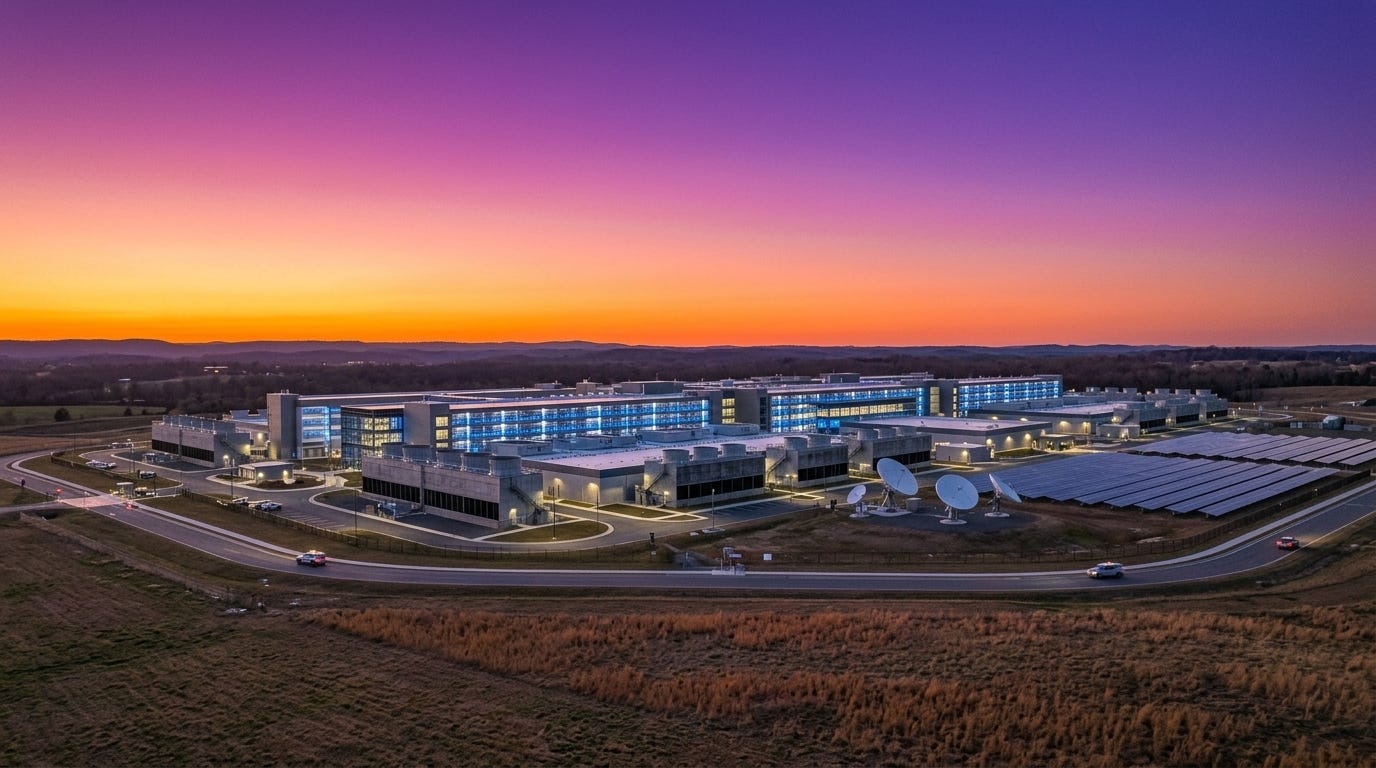
Jefferson County is carrying the heaviest load. The proposed Project Marvel in Bessemer, approved by the city council in November 2025 and granted further rezoning in April 2026, will be a one-gigawatt facility consuming roughly 10 percent of Alabama Power’s total output. Eighteen buildings the size of Super Walmart, a $14 billion to $14.5 billion investment, on a corridor that was agricultural land two years ago. The Nebius BHM01 facility in Oxmoor Valley is a 300-megawatt operation that cleared its last regulatory hurdle in April after the city decided the substation did not require approval.
Shelby County has its own pair of fights. Wilsonville and Columbiana are both in active proposal stages. Walker County is in it too. So when we say three of our seven counties are about to get data centers, that is not future tense. That is current schedule.
None of this is hypothetical to us. We watch Pet Help Desk call volume rise every time utility costs spike, holiday hits, or rent jumps. We have the call records to prove it. When the power bill goes up by twenty or thirty dollars a month, the families on the edge are not the families who can absorb it. They are the families who were already running out of room. The cat food gets cut first. The flea preventive gets skipped. The trip to the vet gets postponed. And then, sometime later, the call comes in.
What the other places already learned
This is not the first wave. It is just the wave that finally reached us.
Northern Virginia has been living with what they call Data Center Alley for years. Loudoun County alone has 199 active data centers and another 117 in development. The State Corporation Commission approved a new Dominion Energy rate structure in November 2025 that adds roughly $16 a month to the typical residential bill, broken into an $11.24 increase in 2026 and another $2.36 in 2027. Virginia regulators got so concerned about residential ratepayers carrying the cost of industrial demand that they created a new rate class to start shifting more of the cost onto the data center operators themselves in January 2027. That structural fix exists because residents pushed for it after watching their bills climb for years.
Memphis is the louder example. The xAI Colossus facility, run by Elon Musk’s company through its MZX Tech subsidiary, brought a different kind of cost. Pollution sensors installed after xAI’s arrival showed peak nitrogen oxide levels from the gas turbines rose 79 percent. Both Shelby County, Tennessee, and DeSoto County, Mississippi, earned an F grade for ozone pollution from the American Lung Association. The Southern Environmental Law Center estimates the facility’s potential annual health damages at $30 million to $44 million. The NAACP filed a request for emergency action to stop the unpermitted pollution. A Tennessee lawmaker on the public record about it said, and I am quoting directly, that they did not want what happened in other states where data centers came in and rates went up twenty to thirty dollars a month.
Twenty to thirty dollars a month. That is the difference between a family making the pet food budget work and not making it work. That is the gap that becomes a Bridge call.
The math nobody is running
Nationally, utilities requested approximately $31 billion in rate increases in 2025, which is double the amount they requested in 2024. Household energy arrearages, the technical term for being behind on the electric bill, rose by 31 percent between December 2023 and June 2025. Forced disconnections climbed from 3 million households in 2023 to 3.5 million in 2024, with projections suggesting we hit 4 million in 2025. Pet care costs rose roughly 15 percent in 2026 alone. Seventy-six percent of Americans now name the cost of living as their top economic concern.
Now layer pet ownership onto that household budget. Sara Pizano’s data puts 77 percent of pet surrenders in the cost-driven category, not the love-driven category. Shelter Animals Count documented surrender intake spikes that move with inflation. Families who would never have considered surrendering a pet at any other point in their lives find themselves staring at a stack of bills and the dog bowl, and the math forces a decision that nobody in the room actually wants.
This is the part of the data center conversation that the zoning hearings do not cover. The transparency complaints are real. The water consumption concerns are real. The noise complaints, the traffic complaints, the property value complaints are all real. But the surrender driver running underneath all of those concerns is the one with the longest tail and the highest body count, and it is the one nobody is funded to track.
What good policy looks like, before it is too late
Alabama actually has tools available right now, if anyone uses them. Senate Bill 270, introduced in February 2026, would require data centers using at least 150 megawatts of electricity to pay for the extra costs they create rather than passing them through to residential ratepayers. Senate Bill 360, which passed the Alabama Senate 32 to 0 in March, would restructure the Public Service Commission, expand the number of elected commissioners, and prohibit power rate increases until 2029. The Alabama House passed legislation requiring the PSC to hold formal rate hearings at least once every three years. The PSC has not held one since 1981.
These are defensive moves and they are necessary, but they are not enough. They protect the bill, not the household behind the bill. The household behind the bill needs a different layer entirely. It needs prevention infrastructure built before the rate increase hits, not after the surrender call lands in a shelter that does not have the capacity to absorb it.
The Bridge Fund exists for this kind of moment. The Pet Help Desk number is on the website. The Foster of Record model is built to catch a family who cannot afford to keep the pet in their home this month but is not ready to give the pet up forever. The SNIP program is built to remove the next round of preventable intake so that when the cost-driven surrender wave does hit, the shelter has room. The 7-county Animal Welfare Resource Network is built to coordinate all of this across organizations that have historically not talked to each other.
None of that is hypothetical either. It is operational. The question is whether the counties paying attention to data center approvals are going to fund the prevention layer that absorbs the cost they are about to push onto families, or whether they will keep doing what they have always done and call it a back-end problem six months from now.
5 Questions Every County Commissioner Should Ask Before Approving a Data Center
This is the part of the article you can screenshot and send to your commissioner. It is not exhaustive. It is the floor.
1. What is the projected residential rate increase tied to this facility, broken down by year, and which independent body has reviewed the projection? Alabama’s PSC has not held a formal rate hearing since 1981. Demand the math in writing.
2. Will the data center pay for at least 85 percent of the contracted distribution and transmission demand it creates and at least 60 percent of the generation demand? That is the threshold Virginia just set as the floor for protecting residential ratepayers. Anything below that, the residential ratepayer is subsidizing the data center.
3. What is the current LIHEAP allocation for households in this county and is it scheduled to grow proportionally with the projected rate increase? If the answer is no, the people who can least afford the rate increase are about to absorb it entirely.
4. What is the projected impact on local shelter intake from a 10 percent residential rate increase, and what prevention infrastructure exists to absorb the surge? Cost-driven surrenders are 77 percent of intake. A 10 percent rate increase pushes a measurable percentage of households over the edge. The shelter capacity does not exist to catch all of them.
5. What is the local pet retention and prevention budget line in the county appropriations, and is it scheduled to grow proportional to the rate increase impact? Reactive animal welfare is a building on fire. Calling 911 faster does not make the building stop burning. The prevention budget has to grow before the rate increase hits, not after.
Any commissioner who cannot answer those five questions in writing is not ready to vote on a data center proposal. Any deal that does not provide those answers is being made over the heads of the families who will pay for it.
What you can do this week
If you live in Jefferson, Shelby, or Walker County: contact your county commissioner and ask the five questions above in writing. Specifically the LIHEAP question and the prevention budget question. Those are the questions nobody else is asking. Your commissioner can refuse to answer them. They cannot refuse to receive them.
If you operate an animal welfare organization in Central Alabama: pull your last six months of call log data and look for cost-driven surrender as a category. If you have not been coding for that, start. The Pet Help Desk intake form supports it. The intake reason taxonomy supports it. Without the data, the case for prevention funding has to be made on instinct. With the data, it has to be funded.
If you are a household watching your power bill creep and wondering whether your pet is going to make it through the next rate cycle: call us before you call anyone else. (205) 754-7542 or (833) 754-7542 toll-free. The Pet Help Desk is built to catch the call before the surrender. The Bridge Fund is built to absorb the gap. The Foster of Record program is built to give you breathing room without breaking the family. We do not ask why you are in this position. We ask what you need so that the family stays together.
That is the only answer to a data center wave that has any chance of holding. Build the prevention layer before the bill lands. Make the math visible before the surrender call comes in. Coordinate the response before the shelter goes back to crisis mode.
We do not have an adoption problem. We have a prevention problem. The data centers are about to make it harder to ignore.
Join the shift to prevention.
Donate to Prevention and fund what happens before the shelter.
Animal-Angels Foundation
angels@animal-angels.org
animal-angelsfoundation.org
Connect with us:
LinkedIn: linkedin.com/company/animalangels
Facebook: facebook.com/animalangelsfoun
Instagram: instagram.com/an.gels377
Animal-Angels Foundation Inc
A 501(c)(3) public charity
Tax ID 41-3166394
We welcome DAF and QCD gifts.
Serving Jefferson, Shelby, Blount, St. Clair, Walker, Bibb, and Chilton counties in Central Alabama.
Pet Help Desk: (205) 754-7542
Email: angels@animal-angels.org
Mail: 4906 Vise Road, Pinson, AL 35126
Web: animal-angelsfoundation.org
Donate: animal-angelsfoundation.org/Donate.html
By Animal-Angels Foundation, a prevention-first 501(c)(3).