


You have seen the jar on the vet counter. The Facebook fundraiser to fix ten cats. The GoFundMe with the sad-eyed dog. We have been trained, all of us, to see spay/neuter as a charity cause. A nice thing animal people do. Something you chip in for if you love dogs and have a few dollars to spare.
That framing is not just wrong. It is expensive, and the people paying for it are not the animals.
Take the words animal welfare off it for a second and look at what spay/neuter access actually prevents. Not litters. Not shelter crowding, though it prevents that too. Look at what it stops from reaching people.
Rabies. It is nearly always fatal once symptoms show, and the reservoir is unvaccinated, free-roaming animals. The low-cost spay/neuter clinic is where the rabies shot happens for the animals who would otherwise never see a vet. Fewer unaltered strays on the street means fewer rabies vectors in the neighborhood. That protects the kid walking to the bus stop, not just the dog.
Parvo. It tears through unvaccinated dog populations in the exact neighborhoods that have no access to care, and once it is in a block it moves fast. It is an animal disease, but the cost lands on families who cannot afford the emergency vet, and on the shelters and taxpayers who absorb what spills over.
Heartworm. Mosquito-borne, and here in the Southeast the mosquitoes barely take a season off, so transmission never really stops. Untreated it is fatal and expensive, and it is a leading reason a family gives up a dog they cannot afford to save.
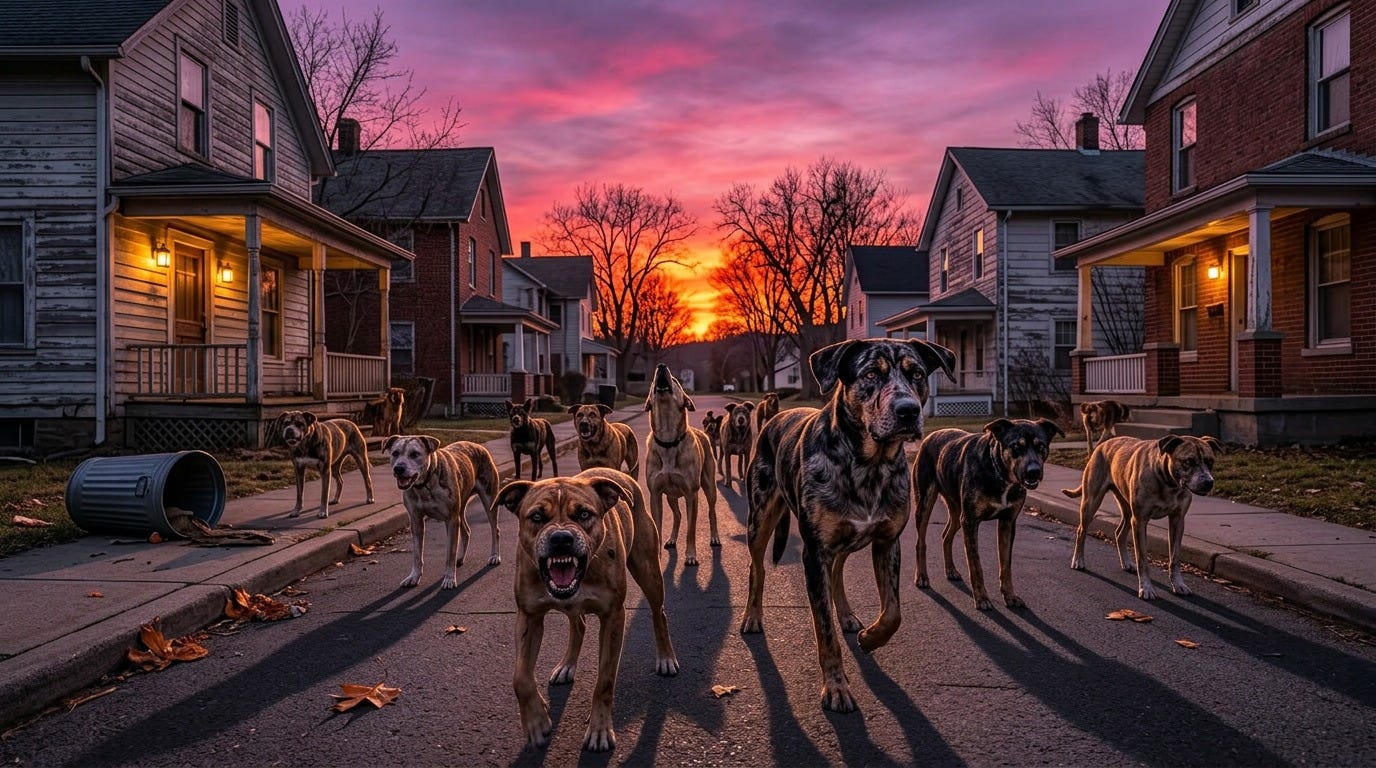
Dog bites and free-roaming packs. Unaltered, roaming, unsocialized dogs drive bite incidents, emergency room visits, and pack behavior on public streets. Every resident carries that risk, whether they own a pet or not.
Here is the thread running through all of it. Every one of those is downstream of the same thing, too many unaltered, unvaccinated animals in places with no access to a vet. Spay/neuter access is the upstream fix for all of them at once. It is not a pet perk. It is disease control and public safety wearing a fur coat.
Now here is the part that should make you angry, because we already know how to fund this. We just refuse to when the patient has four legs.
We do not run a bake sale to spray for mosquitoes. The county budgets for it, because West Nile is a public threat and prevention is cheaper than an outbreak. We do not pass a donation jar to inspect restaurants, treat the water, or run vaccination drives. We fund those as public functions, on purpose, out of the budget, because protecting people from preventable, communicable harm is a public responsibility. Nobody argues about it.
Spay/neuter and community vaccination sit in that exact category. Same logic, same math, same public benefit. But somewhere along the way we filed them under animal charity and walked away, and now a core public health function depends on whether enough animal lovers happen to chip in this month. That is a category error, and it is costing communities real money.
This is not a swipe at donors. Thank God for the donors, because right now they are the only thing holding this up. The point is that a donation jar was never the right funding model for a public health service, and leaning on one guarantees the work stays small, unstable, and always one slow month from stopping.
Look at the money honestly. One rabies exposure workup. One dog-bite emergency room visit. One parvo outbreak on a block. One shelter absorbing the overflow of animals nobody could afford to fix. Each of those costs the public far more than the surgery and the shot that would have prevented it. We pay either way. We can pay a little, upstream, on purpose. Or we pay a lot, downstream, in a crisis we saw coming. Right now we have chosen a lot, downstream, and we call the cheaper option a luxury.
Counties and cities already fund animal control. We pay people to pick up the stray, house it, and too often euthanize it. That is the mop. It is the most reactive, most expensive end of the whole problem, and it is the part we have decided is worth public dollars. The same budget logic that pays for animal control justifies funding access to spay/neuter and vaccination many times over, because one shrinks the problem permanently and the other just manages it forever.
I am not asking government to get into animal welfare. I am asking it to recognize public health when it is standing in the road. Free-roaming, unaltered, unvaccinated animals are a disease and safety vector, the same way standing water and unsafe food are. Treat them like one.
At Animal-Angels Foundation we run free spay/neuter and our High-Impact Clinics because the access gap is real and right now nobody else is filling it in these rural pockets. We will keep doing it. But make no mistake about what it is. It is public health work, funded by a nonprofit, because the systems that should own it have not caught up to what it actually is.
The faucet is running. We keep paying people to mop.
Prevention is the missing piece.
It is time we funded it like one.
Join the shift to prevention.
Donate to Prevention and fund what happens before the shelter.
Animal-Angels Foundation
angels@animal-angels.org
animal-angelsfoundation.org
Connect with us:
LinkedIn: linkedin.com/company/animalangels
Facebook: facebook.com/animalangelsfoun
Instagram: instagram.com/an.gels377
Animal-Angels Foundation Inc
A 501(c)(3) public charity
Tax ID 41-3166394
We welcome DAF and QCD gifts.
Serving Jefferson, Shelby, Blount, St. Clair, Walker, Bibb, and Chilton counties in Central Alabama.
Pet Help Desk: (205) 754-7542
Email: angels@animal-angels.org
Mail: 4906 Vise Road, Pinson, AL 35126
Web: animal-angelsfoundation.org
Donate: animal-angelsfoundation.org/Donate.html
By Animal-Angels Foundation, a prevention-first 501(c)(3).